Showing posts with label Books. Show all posts

Wednesday, November 19, 2008

A Book is the Only Mortality...

The Reader
By Bernhard Schlink

Year: 1997

Don't let the Oprah's Book Club sticker fool you, luckily this is not a book whose sole audience is people who are willing to read simply because a celebrity tells them to. No, Lucky for both the reader of this novel and for the reviewer, judging a book solely by the fact that a talk show host picked this particular book as an entry into her 'collection' is a crime. The Reader is a book that begs to be read and will no doubt provoke discussion once it has been read.

The book starts sometime after WWII in Germany and involves a young man by the name of Michael Berg. Michael is fifteen at the beginning of the story and serves as our narrator. From literally the first sentence, we learn that Michael at fifteen gets hepatitis and falls ill under it. On the way to school one day, he gets sick and is aided by an anonymous woman, some stranger who appears at the nick of time to clean up and mend him afterwards. However, to Michael, seeing her only that one time without thanking her is a crime. And so he goes to her house in lieu of attending school to see this mysterious woman. It is not long before Michael and the woman, who we learn is named Hanna Schmitz, embark of a passionate and heated relationship. While sex is a key part in their relationship, time and time again Hanna will ask Michael to read to her out loud, something that though I won't spoil proves to be a key part in the second and third acts of the book.

However, like the seasons, their relationship ends shortly with Hanna vanishing one day, where she goes or where she is heading is unclear to Michael, but it is only time before we learn where. A court perhaps. For we shortly thereafter learn that Hanna during the war worked with the SS and was responsible for the death of hundreds of women and children.

The second part of the novel details the trial and Michael realizing who Hanna truly was. What could prove to be a stale courtroom drama is a morality tale at the core. Michael only knows this woman from their love affair and it is a while before he can fully wrap his head around what she has done. Again, not to give anything away, but one may wonder if he ever does. During this trial, Michael is confused as to why Hanna, who he knew as a brazen and spirited woman falls upon deaf ears when attending the trial. Maybe she is hiding something, something that she is not only ashamed of but may be crucial.

Michael spends the remainder of the book picking up the pieces to his life and to the life he and Hanna had. He takes journeys to come to terms with everything he has spent the book dealing with. He wants to hate her for being such a violent and cold criminal, but he cannot. While what they did was illegal, she being more than twice his age, to the protagonist, it was not a crime, it was passionate love. Whether we agree with him or not is all up to our own personal beliefs.

Though being short on length, The Reader is a very dense book. The language may seem simple, but it is straightforward and truly captivating. There is so much going on in this book that a mere synopsis will do the novel no justice. Simply sitting down and reading is the best way to handle the book, to let it sink in and take control of you. I personally found it to be a magnificent book, one that challenged the reader with not only the core story, loved ones who hurt us, but also the morals and themes it brings up. Atonement, redemption, forgiveness, right, wrong, love and death. Threading everything together and creating a delicate and powerful novel, Schlink proves that even romantic tales can have deeper meanings. That books can truly make you feel for its characters and that you yourself can get inside the heads of its main players. While many have this talent, so few can truly let the story envelop and raise morals. Once you turn the final page, you will be satisfied.

*A note to people intrigued by this book: Ignore Amazon! It praises the book to the point where the novel's twist if you will is exposed. It is key to let the book speak for itself.

Well, I'll step of my soapbox and let the novel to the talking.

Friday, March 28, 2008

So, after living life, what happens next?

The Perks of Being a Wallflower
Author: Stephen Chbosky

Year: 1999

Way back when, an author by the name of J.D Salinger wrote the classic book about teenage life, The Catcher in the Rye, a book that was about a young man that is brutally honest, frank, and yet, endearing. It seems that Chbosky's intentions were that to take the tough but wise protagonist/narrator who tells his story about life and growing up. However, I have not read Catcher, I have read Perks of Being a Wallflower and honestly, I feel that while the dialogue is very true to teenagers and that the activities that teenagers get involved in, sex, drugs and Rocky Horror are real, but after reading this slim novel, I had one burning question:

Why the hell should I care?

Granted, Perks is a book with its own cult following, one that I had heard talked about by teens for ages until I actually read the book itself, and to be honest, I am not impressed.

I read Perks when I was the age of the narrator, Charlie, I was about to start high school, so it was about the end of the year that I read the book. The story involves Charlie, a freshman who writes to an anonymous friend, one we never learn the identity of. Charlie's friend killed himself not too long ago, so Charlie's method of grieving is to cry. However, it is not long before he meets up with the cool kids and is introduced into their life, their circle of friends, their lives. Charlie has problems brewing at home, so he is just desperate to find friends and be cool, so he does. However, he also befriends a teacher who challenges him and lets him work to his full potential. In the end, his potential is pretty much a small after thought, seeing as smoking and alcohol have taken up what could make him great. And his friends are the 'good guys'.

One of my major problems does not lie in the whole aspect of a kid doing drugs, partying and living his life with older kids, I pretty much did the same growing, granted I didn't immerse myself into the drugs and alcohol subculture. However, Charlie was not me at all growing up. Reading this book, I kind of felt, dare I say, repulsed by him. He seemed less of a cool kid hanging out with the seniors, more or less the little freshman who followed around the big kids. Reading him talk about his interactions with his friends, I didn't feel jealous, I just felt like how the hell is he just coasting by life, getting friends that are anything but trustworthy, dating people who are out of his league, and as I mentioned before, the only thing I got out of this was that he gets into addiction and all of that jazz. It's rather difficult to describe my dislike for Charlie, but I just felt that because he was popular, because he went to parties, he wasn't someone I wanted to be, he wasn't my voice. For once I felt like this young teenage boy was just someone I wouldn't be friends with, making me feel like a judgmental senior, which sounds horrible, and yet, I was one of the few who felt that this book did not speak out to them.

Another gripe I had with Perks was that though it is a short, sleek novel, nothing seems to happen that is particularly important. Besides the parties, the hanging out, the drinking and smoking, all I really walked away with was not to make the same mistakes these characters did. Nothing threatened their lives, they had lousy times, but nothing really changed them, there was no eventual realization that maybe life was something important not to waste time lazing around. Call me cold, but I expecting something big to change their lives, death, AIDS, an STD, anything that made the book truly stand out as something other then a bored teen's guide to parting.

Damn, do I feel like an adult.

In a nutshell, The Perks of Being a Wallflower isn't a bad book; it's not very long, it's readable, the dialogue is believable, and there are some scenes that stand out. It's not a bad book, it just has way too much of a cult following based upon a fair young adult novel. If you want to read a book that is this, only 100 million times better is Looking for Alaska. Believe me, it blows this one out of the water and justifies my annoyance for this book.

Wednesday, February 27, 2008

The Age of Innocence

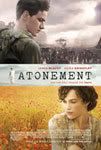
Atonement
Written by: Ian McEwan
Year Published: 2001


Well, the main reason for reviewing this book is two things: 1) I felt my blog needed to have some book reviews among many posts that defend America(Somewhat) and the generalization that our movies suck as well as describe my hate for backlash. While this may not necessarily a bad thing, I needed some variety. 2) I wanted everyone to know this: Atonement is a damn good book. It is so great, it's riveting and it is also without a doubt a beautiful and haunting tale that truly will spellbind you. I'm not making any of this up. Seriously.

If you haven't seen/read or heard about the story, it's simple and at the same time complex. It starts out as a book about an imaginative and mischievous girl, Briony, who observes a brief moment between her sister, Cecelia and their poor hired hand, Robbie. We later learn that this alleged naughty businesses is not at all what it seems, a recurring theme in the book. Briony wants to perform her play, but unfortunately her cousins are less then enthusiastic about acting. She also feels left out and ignored while the people at her house await the arrival of her older brother, Leon. So curiosity kills the cat, and then Briony decapitates the cat and all hell breaks loose. She is nosy, she is very unlikable, frequently through out the book and movie I wanted to slap her for being so foolish and stupid. It is because of her spying on Robbie and Cecelia and their behaviors that cause Briony to accuse Robbie of a horrible crime and let the culprit walk free.

Though it might not seem like it, Atonement, at least as I saw it, was not a romance movie as the film has been marketed out to be. It is a story about making mistakes, getting caught up in the wrong situations and having to repent for what we have done. It might not be as dire or as life threatening as seen in Atonement, but still, it does best describe what happens when lies and accusations are thrown at each other and what happens when we get in too over our heads.

Above all, Atonement is more or less a lesson. With rich and vivid language, Mcewan creates a scenic and spectacular story come to life. The majority of Atonement relies on the internal thoughts of the characters in the story. This not only enhances the reading, but it also makes the reader truly cherish the words. In the course of reading it, I felt intense emotions for the characters and towards the actions they did. Though you couldn't help but feel remorse for Briony once she gets older, but when you look back and think about how awful her accusation was, you start to realize that she has learned from her mistakes the hard way. And now, it is too late to change things.

Though not a long read, Atonement is a gem of a book. By combining a story that is about love lost by a cruel misunderstanding it also brings together a book about forgiveness and also about the horrors of war and how it tears people's lives apart. I do not want to overindulge on Mcewan, but I am definitely looking forward to reading another one of his haunting books.